
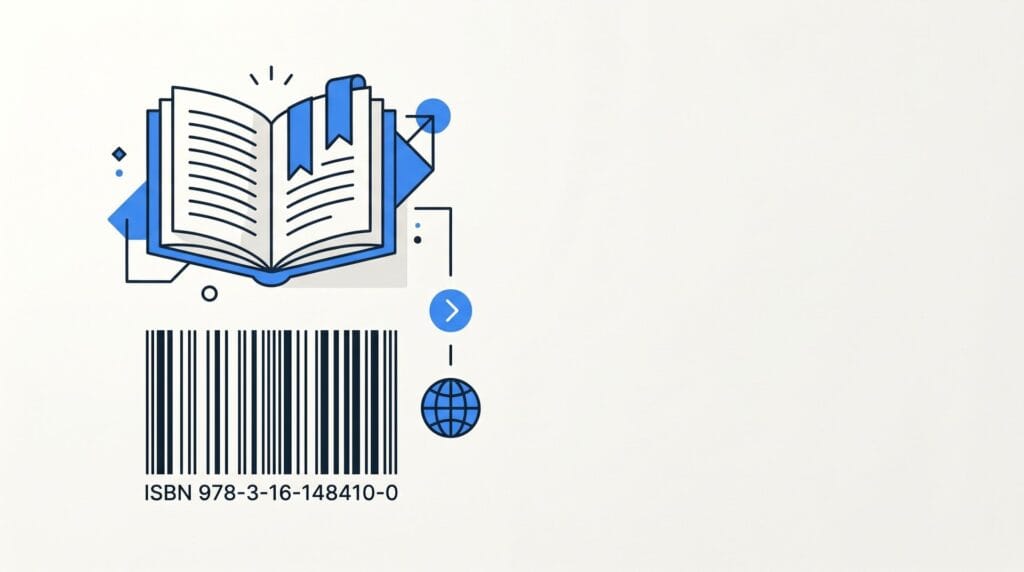
For new self-publishers, the path from finished manuscript to published book involves a number of essential steps — and understanding ISBN cost and barcode pricing is one of the most misunderstood parts of the journey. Many first-time authors assume an ISBN is just a formality, or that the barcode on the back of their book is automatically included. In reality, these are distinct identifiers with distinct costs, and the decisions you make around them have lasting consequences for how your book is listed, sold, and discovered globally.
The good news: with the right information, navigating ISBN and barcode pricing does not have to be confusing or expensive.
This guide breaks down seven practical strategies to help you make informed, cost-effective decisions. From understanding what you are actually paying for, to recognizing the difference between an authentic ISBN assignment and a reseller workaround that could limit your publishing rights, each strategy is designed to help you budget wisely and publish with confidence.
Whether you are publishing a single title or planning a small catalog, these strategies give you the foundation you need. ISBN US, as an authorized agent of the US ISBN Agency, assigns ISBNs directly in your name and provides access to the Bowker Books in Print Global Database, giving you full ownership and global discoverability from day one.
1. Know Exactly What You Are Paying For: ISBN vs. Barcode
The Challenge It Solves
One of the most common budget surprises for new self-publishers is discovering that an ISBN and a barcode are not the same thing. They are related, but they are separate products with separate costs. Conflating the two can leave you scrambling at the final production stage, when your printer is waiting on a print-ready barcode file you never ordered.
The Strategy Explained
An ISBN (International Standard Book Number) is a 13-digit identifier that uniquely identifies your book by publisher, title, and format. It is the number that libraries, retailers, and distributors use to catalog and order your title. The ISBN lives in databases and systems behind the scenes.
An EAN-13 barcode is the machine-readable visual representation of that ISBN. It is the striped symbol printed on the back cover of your book that a retailer scans at the point of sale. The EAN-13 format is the international standard governed by GS1, the global body overseeing barcode standards. Both are necessary for retail distribution, but you must order and budget for each one separately.
Implementation Steps
1. When budgeting for your book, create two separate line items: one for your ISBN assignment and one for your barcode file.
2. Confirm with your ISBN provider whether a barcode file is included or available as an add-on. At ISBN US, barcode files are available alongside your ISBN assignment.
3. Order your barcode file in the correct format for your printer. Most printers require a high-resolution EPS or PDF file suitable for commercial printing.
Pro Tips
Ask your printer upfront what barcode file format they require before you order. Some printers specify minimum resolution requirements or preferred file types. Getting this detail right before you place your order saves you revision time and potential reprinting costs. Think of the ISBN as the identity and the EAN-13 barcode as the face of that identity on your physical book.
2. Buy Direct from an Authorized Source, Not a Reseller
The Challenge It Solves
Not all ISBN providers are equal. Many companies selling ISBNs online are resellers who assign numbers from their own publisher prefix. That means the ISBN is registered in the reseller’s name in global databases, not yours. This is one of the most consequential mistakes a self-publisher can make, and it is entirely avoidable when you know what to look for.
The Strategy Explained
The ISBN system is structured so that each publisher prefix corresponds to a specific publisher of record. When you purchase an ISBN from an authorized agent like ISBN US, the ISBN is assigned directly to you or your imprint. Your name appears as the publisher of record in the Bowker Books in Print Global Database and in retailer and distributor systems worldwide.
When a printer or publishing service provides you with an ISBN from their own prefix, their company name appears as the publisher, not yours. This can affect your professional credibility, your rights position, and your flexibility to move your book to different distributors or retailers in the future. On platforms like Amazon KDP, a book listed with an author-owned ISBN displays the author’s imprint as publisher, which is a meaningful distinction for anyone building a publishing brand.
Implementation Steps
1. Before purchasing an ISBN from any provider, ask directly: “Will this ISBN be registered in my name as the publisher of record?”
2. Verify that the provider is an authorized agent of the US ISBN Agency, not simply a reseller or bundler.
3. Visit ISBN US at isbn-us.com to obtain an ISBN assigned directly to you, with your name or imprint on the record from day one.
Pro Tips
Be especially cautious with publishing packages that advertise “free ISBNs” as part of a bundle. Free rarely means ownership. If the ISBN is provided by the publishing service, that service is almost certainly the publisher of record, not you. The cost of a properly assigned ISBN is small compared to the long-term value of owning your publishing identity.
3. Understand Single vs. Block Pricing to Match Your Publishing Plan
The Challenge It Solves
ISBN pricing typically follows a volume model. Purchasing a single ISBN costs more per unit than purchasing a block of multiple ISBNs. Many first-time authors purchase a single ISBN without thinking ahead, only to find themselves paying single-unit pricing again and again as their catalog grows. A little planning upfront can lead to meaningful savings.
The Strategy Explained
If you are publishing your first and only book with no plans to release additional titles or formats, a single ISBN may be the right choice. But if you are planning a series, releasing multiple formats of the same title, or have any intention of publishing additional books in the future, purchasing a block of ISBNs from the start is almost always more economical per unit.
Think of it like buying in bulk at a warehouse store. The per-unit cost drops significantly when you purchase a larger quantity. For a self-publisher with even modest ambitions, a block purchase is a smart investment that eliminates the need to return to the purchasing process repeatedly.
Implementation Steps
1. Before purchasing, map out your publishing plan. List every title you intend to publish and every format you plan to release (paperback, hardcover, eBook, audiobook).
2. Count the total number of ISBNs you will likely need across all titles and formats over the next one to two years.
3. Compare single vs. block pricing at ISBN US to determine which option offers the best value for your specific plan. Current pricing is available directly on the site.
Pro Tips
When in doubt, lean toward the next pricing tier up. ISBNs do not expire, so purchasing a block you do not immediately use is not wasteful. It is simply advance planning. Many publishers who started with a single ISBN wish they had purchased a block from the beginning once their catalog began to grow.
4. Factor Barcode Costs Into Your Pre-Publication Budget
The Challenge It Solves
Authors who reach the final production stage without a print-ready barcode file often face an unexpected scramble. Printers need this file before they can produce your book cover, and discovering mid-production that you have not ordered it creates delays. Budgeting for your barcode file early keeps your production timeline intact.
The Strategy Explained
The EAN-13 barcode file is a separate deliverable from your ISBN. Once your ISBN is assigned, a barcode file must be generated and formatted for commercial printing. This is typically a low one-time cost relative to the ISBN itself, but it must be explicitly ordered and accounted for in your budget.
Some retailers and distributors also use a price add-on barcode, which is a 5-digit supplemental barcode that appears alongside the EAN-13 and encodes a suggested retail price. This is optional and not required by all retailers, but it is worth understanding so you can decide whether it applies to your distribution channels. GS1, the global body governing barcode standards, defines the specifications for both the EAN-13 and the supplemental price add-on formats.
Implementation Steps
1. Add a barcode file line item to your pre-publication budget at the same time you budget for your ISBN.
2. Decide whether you need a price add-on barcode based on your intended retail channels. Ask your distributor or retailer if they require or prefer it.
3. Order your barcode file from ISBN US alongside your ISBN assignment, and confirm the file format your printer requires before downloading or submitting.
Pro Tips
Do not wait until your cover design is finalized to think about the barcode. Your cover designer needs to know the dimensions and placement of the barcode early in the design process. Providing your designer with the barcode file and size specifications upfront prevents layout revisions later.
5. Recognize the True Cost of Publishing Packages That Include ISBNs
The Challenge It Solves
Publishing service companies frequently advertise “free” or low-cost ISBNs as part of their packages. On the surface, this looks like a money-saving benefit. In practice, it often comes with a significant hidden cost that is not measured in dollars but in ownership and control over your own book.
The Strategy Explained
When a publishing service provides you with an ISBN, that ISBN is typically drawn from the service company’s own publisher prefix. This means the publishing service, not you, appears as the publisher of record in global databases including Bowker Books in Print. Libraries, bookstores, and distributors who look up your title will see the publishing service’s name, not yours or your imprint’s.
This arrangement can affect your ability to move your book to a different distributor, your professional credibility when submitting to reviewers or media, and your long-term rights position. It is not a hypothetical concern. It is a structural feature of how the ISBN system works, and it is worth understanding before you accept any “included” ISBN from a third-party service.
Implementation Steps
1. When evaluating any publishing package, ask specifically: “Whose publisher prefix will this ISBN be registered under?”
2. If the answer is the publishing service’s name, factor in the long-term cost of not owning your publishing identity before deciding whether the package price is truly a bargain.
3. Purchase your own ISBN from an authorized agent like ISBN US before engaging any publishing service, so you bring your own ISBN to the arrangement and retain full publisher-of-record status.
Pro Tips
Think of your ISBN as your publishing imprint’s foundation. A publishing service can help you format, print, or distribute your book. But the ISBN is the identifier that follows your title through every database, every library catalog, and every retailer system for the life of the book. That identifier should carry your name, not someone else’s.
6. Plan for Multiple Formats — Each Format Requires Its Own ISBN
The Challenge It Solves
Authors who plan to release their book in multiple formats — paperback, hardcover, eBook, and audiobook — are sometimes surprised to learn that each format requires its own unique ISBN. Discovering this after purchasing a single ISBN means returning to purchase additional ISBNs at single-unit pricing, which is less economical than planning ahead and purchasing a block.
The Strategy Explained
According to the International ISBN Agency guidelines, each distinct format of a book is treated as a separate product and must be assigned its own ISBN. A paperback and a hardcover edition of the same title are different products in the ISBN system. An eBook and a print edition are different products. An audiobook is a different product. Each requires its own unique 13-digit identifier.
This is not bureaucratic complexity for its own sake. It ensures that when a library orders the paperback edition specifically, the correct product is identified and fulfilled. It ensures that when a retailer lists your eBook, it is cataloged separately from your print edition. The system works because each format has a distinct identity.
Implementation Steps
1. List every format you plan to release: paperback, hardcover, eBook (EPUB, MOBI, PDF), and audiobook. Count the total.
2. If you are planning a series, multiply that format count by the number of titles in the series to arrive at a total ISBN estimate.
3. Use that total to determine whether a block purchase makes more sense than buying individual ISBNs. Visit ISBN US to compare current block pricing against your estimated needs.
Pro Tips
A revised edition with substantive changes also requires a new ISBN, per International ISBN Agency guidelines. If you plan to release an updated edition of your book in the future, factor that into your ISBN count as well. Planning comprehensively at the outset is always more cost-effective than purchasing ISBNs reactively as new formats and editions emerge.
7. Leverage Your ISBN Investment with Global Database Registration
The Challenge It Solves
Many self-publishers purchase an ISBN, attach it to their book, and consider the job done. What they miss is the significant discoverability opportunity that comes with registering their title data in the Bowker Books in Print Global Database. An ISBN that is not backed by complete metadata in this database is a missed opportunity for libraries, bookstores, and distributors to find and stock your title.
The Strategy Explained
The Bowker Books in Print database is the primary bibliographic database used by libraries, bookstores, and distributors in the United States to discover, catalog, and order titles. When your title data is registered in this database, it becomes searchable by the buyers and collection managers who make purchasing decisions every day.
ISBN US provides publishers with direct access to submit title metadata to the Bowker Books in Print Global Database. This is a meaningful differentiator. Not every ISBN provider offers this direct submission capability. Registering your title data with complete, accurate metadata, including title, author, description, subject categories, and pricing, maximizes the return on every ISBN you purchase by making your book discoverable to the widest possible professional audience.
Implementation Steps
1. After your ISBN is assigned through ISBN US, log in to your account and access the Bowker Books in Print submission portal to enter your title metadata.
2. Complete all available metadata fields: title, subtitle, author name, description, subject categories (BISAC codes), format, page count, price, and publication date. Incomplete records reduce discoverability.
3. Update your metadata record whenever your book’s status changes, such as when a new format is released or when pricing is updated, to keep your listing current and accurate.
Pro Tips
Think of your metadata record as your book’s professional resume in the publishing world. Librarians and buyers search by subject category, keyword, and format. A well-completed metadata record increases the likelihood that your title surfaces in those searches. The ISBN is the key that opens the door to the database. Your metadata is what makes buyers stop and take notice once they are inside.
Putting It All Together: Your Publishing Foundation Starts Here
Understanding ISBN cost and barcode pricing is not just a budgeting exercise. It is a publishing infrastructure decision. The choices you make now determine who owns your ISBN, where your book appears in global databases, and how easily retailers and libraries can find and stock your title.
Here is a quick summary of the priorities covered in this guide:
Start with clarity: Know that an ISBN and an EAN-13 barcode are separate products with separate costs. Budget for both before you reach the production stage.
Own your identity: Purchase your ISBN from an authorized agent of the US ISBN Agency so the ISBN is registered in your name, not a reseller’s or publishing service’s name.
Plan ahead: Map out all your formats and titles before purchasing. Block pricing is almost always more economical than buying ISBNs one at a time as your catalog grows.
Watch for hidden costs: “Free” ISBNs bundled into publishing packages typically come with a significant non-monetary cost: someone else’s name on your publisher record.
Maximize discoverability: Register your title metadata in the Bowker Books in Print Global Database to ensure libraries, bookstores, and distributors can find and order your book.
ISBN US makes this process straightforward. As an authorized agent of the US ISBN Agency, we assign ISBNs directly in your name, provide print-ready barcode files, and give you direct access to the Bowker Books in Print Global Database. Our consultants are available by phone and web chat to walk you through every step of the process, from your first ISBN to your growing catalog.
Start with the right foundation. Apply for ISBNs Now and publish with confidence, knowing your name is on the record from day one.