
Getting your book onto store shelves, retailer websites, or into the hands of readers hinges on one often-overlooked detail: the barcode. If you’re preparing a print book or managing publishing for the first time, it’s essential to understand how barcodes work, how they fit into the book supply chain, and why proper barcode management can mean the difference between a visible, sellable title and wasted printing costs. Here, we’ll take you step by step through everything an author or independent publisher needs to know—drawing on authoritative experience from ISBN US, a nationally trusted ISBN and barcode solution for self-publishers and small publishers.
What Is a Book Barcode? A Concise Definition
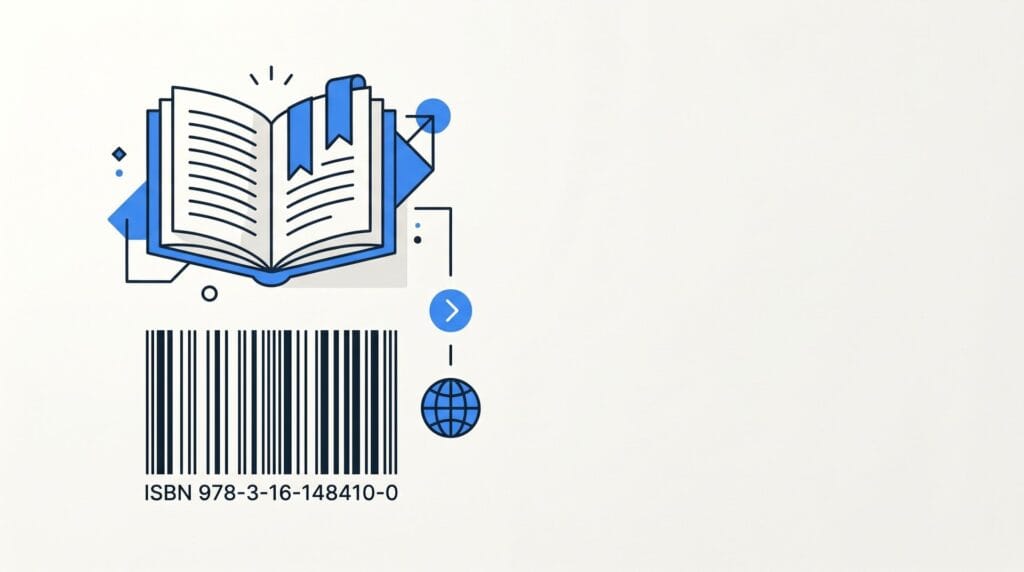
A book barcode is a machine-readable graphical symbol, typically found on the back cover of a physical book. It encodes the book’s International Standard Book Number (ISBN) so it can be scanned quickly by retailers, distributors, and warehouses. Most book barcodes use the Bookland EAN-13 format, often paired with a 5-digit price add-on that tells retailers the book’s intended cover price for easier point-of-sale processing.
Why Every Print Book Needs a Barcode
Barcodes are not just preferred—they are required for most professional distribution scenarios. Retailers, national bookstore chains, distributors, wholesalers, and even many printers need a compliant barcode to process, track, and re-order titles. Without a barcode, your book cannot move smoothly through industry-standard inventory systems. Most retailers will refuse to stock or sell a print title that isn’t barcoded, as it breaks their sales and inventory automation.
The Role of the ISBN and Barcode in Distribution
Your ISBN is the globally recognized identifier for your book’s title, edition, format, and publisher. The barcode translates this ISBN (and, optionally, your list price) into a scannable form compatible with the Bookland EAN standard for books. Each edition or format (such as paperback, hardcover, or large print) needs its own ISBN and corresponding barcode to ensure precise tracking.
Step-by-Step Guide: How to Get a Barcode for Your Book
- Choose where you plan to sell: If you want to distribute through bookstores, retailers, Amazon, and wholesalers, you need an ISBN and compliant barcode. For eBook-only titles, only an ISBN is necessary.
- Select the appropriate ISBN package: ISBN US structures ISBN and barcode services based on distribution needs:
- Self Publisher Package ($55): Includes a high-resolution barcode, suitable for direct sales, Amazon FBA, local stores, and your website.
- Publisher Package ($129): Registers the ISBN to your own company name (or imprint) and includes a print-ready barcode for national/international retail, bookstore, and wholesaler distribution.
- eBook ISBN ($29): For digital-only sales; barcodes are not required for eBooks.
- Checkout and receive instant access: After purchasing from ISBN US, you receive your ISBN and instant access to the Title Portal. High-resolution, vector barcode artwork (.eps) is emailed so you can forward it to your cover designer or printer immediately.
- Integrate the barcode into your cover: Place the barcode on the bottom right area of your back cover, ensuring there’s enough white space for scanner accuracy. ISBN US offers cover design support to make sure the placement and sizing are correct.
- Manage your title and sales info: Enter your book details into the Title Portal for listing in global book databases, which is critical for discovery and sales.
Types of Book Barcodes: ISBN vs UPC
Authors often ask about the difference between an ISBN barcode and a UPC barcode. For the book industry, the ISBN barcode in Bookland EAN-13 format is standard and required. UPCs are for general merchandise and only exceptionally needed for specific mass market arrangements. ISBN US focuses on Bookland EAN barcodes since they are accepted at all retail, library, and wholesale channels for books.

Barcode Format and the Bookland EAN-13 Standard
Professional barcodes for books use the Bookland EAN-13 format, encoding your ISBN as a 13-digit sequence. Many barcodes include an optional five-digit price add-on, allowing point-of-sale systems to automatically display the intended cover price. ISBN US delivers high-resolution vector files, ensuring compatibility with all industry scanners and printers—an essential requirement in retail environments.
Common Barcode Mistakes Authors Make (And How to Avoid Them)
- Using unauthorized or “cheap ISBNs”: Only purchase ISBNs and barcodes from authorized agencies. ISBN US is a Bowker-authorized partner, ensuring your ISBN and barcode are officially registered and accepted. Unauthorized or reused ISBNs will often result in your book being rejected by retailers or listed incorrectly in industry databases. Learn more about buying ISBNs safely.
- Low-resolution barcode images: Images grabbed from the web or compressed excessively may print blurry, leading to scan failures. ISBN US delivers .eps vector artwork specifically for print requirements.
- Incorrect barcode placement: Cover designers sometimes place barcodes too close to the edge or over background colors, making them unscannable. Use the bottom right area of the back cover, with generous white space around the code.
- Using one barcode for multiple formats: Each unique edition (paperback, hardcover, large print) must have its own ISBN and barcode. Reusing a barcode across editions results in supply chain and sales tracking errors.
- ISBN not registered in your name: If your ISBN is tied to another company’s imprint, you lose control and may be listed incorrectly in catalogs and databases. ISBN US assigns ISBNs directly to your name or company for maximum publishing autonomy.
Barcode Placement & Design Best Practices
- Place the barcode at the bottom right of the back cover, away from the spine and cover edges.
- Ensure a “quiet zone”—ample white space around the barcode to prevent scanning errors.
- Use only the high-resolution file supplied by ISBN US and never resize outside of professional design standards.
- Never overlay other graphics or text on the barcode area.
Barcodes, eBooks, and Digital Publishing
Barcodes are not required for eBooks because there is no physical product to scan at a point of sale. However, each distinct eBook format may require its own ISBN for proper cataloging. ISBN US offers affordable eBook ISBN packages to help authors meet these requirements across Kindle, iBooks, Kobo, and other platforms.
Integrating ISBN and Barcode Into Your Publishing Workflow
Whether you’re publishing your first title or managing a larger backlist, using ISBN US means you gain control, peace of mind, and the right technical foundation. Our process is designed for simplicity:
- Step-by-step onboarding with instant access to your ISBNs and print-ready barcodes
- Centralized title and sales info in the management portal
- Direct support from experienced US consultants

Best Practices: Preparing Your Book for Professional Distribution
- Acquire your ISBN and barcode before designing your book cover
- Verify your ISBN is unique to each format and acquired from an authorized source
- Use the barcode file supplied by ISBN US to ensure printing quality and scannability
- Test barcode placement on cover proofs with your printer
- List your book in the ISBN US Title Portal for database discoverability
- When ready, consider additional services such as formatting, cover design, and copyright registration to round out your professional publishing toolkit
ISBN, Barcodes, and Copyright: Building a Rock-Solid Foundation
While barcodes and ISBNs make your book commercially discoverable and trackable, legal protection comes from timely copyright registration. ISBN US offers a streamlined Copyright Registration service to help authors secure their rights—complementing distribution readiness with legal peace of mind.
Checklist: Is Your Book Barcode Ready?
- Do you have a unique ISBN for each print format?
- Did you purchase your ISBN and barcode from an authorized agent, like ISBN US?
- Are you using a high-resolution, Bookland EAN-13 compliant barcode?
- Is your barcode placed according to industry guidelines?
- Have you submitted your title info to the ISBN US portal for database publication?
Comprehensive FAQ: Barcodes & Book Distribution
Do I need a barcode for my print book?
Yes, almost all commercial printers, bookstores, distributors, and retailers require a barcode for professional print book distribution.
Is a barcode required for eBooks?
No, barcodes are used for physical scanning. Each eBook format should still have its own ISBN for cataloging on digital platforms.
What format should my barcode be in?
Book barcodes are almost always Bookland EAN-13, derived from your 13-digit ISBN. ISBN US supplies high-resolution .eps vector files tailored for book publishing.
Can I reuse a barcode across formats?
No. Each unique edition or book format, such as paperback and hardcover, must have a distinct ISBN and barcode.
What risks come from using unauthorized ISBN resellers?
ISBNs from resellers not recognized by the US ISBN Agency can result in incorrect publisher data, distributor rejections, and long-term problems with cataloging and sales. Always use a verified source such as ISBN US.
Does ISBN US provide immediate access after purchase?
Yes. Self Publisher and eBook ISBNs are delivered within minutes, while Publisher Package assignments for full retail access are processed within 24 hours.
Where do I place my barcode on the cover?
Bottom right of the back cover, ensuring a clean, uninterrupted white space around it for reliable scanning.
Are there common mistakes I should avoid?
Avoid unauthorized barcodes, low-resolution images, misaligned publisher data, and incorrect barcode placement. ISBN US provides guidance and ensures barcodes comply with professional standards every step of the way.
Conclusion: Move Forward with Confidence
Barcodes are a pivotal part of professional book publishing, giving your title the visibility and trackability it needs for success in retail, library, and wholesale channels. By working with ISBN US, you gain reliable, instant access to compliant ISBNs and high-quality barcodes—empowering you to distribute your book everywhere you choose, with no hidden surprises or roadblocks along the way.
If you want to dive deeper into how to protect your book’s legitimacy and avoid ISBN pitfalls, we also recommend reading What to Watch Out For When Buying ISBNs Online: Protecting Your Book’s Legitimacy.
Ready to make your manuscript visible and discoverable in stores around the world? Explore your options or start the publishing journey today at ISBN US.